
The University of 2030? “More Open Science, Stronger Humans, and More Transparent Technology.”
Rector Billari, the new Strategic Plan revolves around three principles: science, people, and Artificial Intelligence. Why?
Because they represent three dimensions that reinforce each other and describe how we want to interpret the future of the University. The first concerns the role of research and scientific method - rigor, transparency, verifiability - which allows academic institutions to navigate a world that produces more data, opinions, and uncertainties than it can process. Taking the word “science” seriously when talking about social sciences is at the same time rigorous and assumption of responsibility. The second dimension reminds us that people remain at the center. Demographics show us how human capital, especially in rapidly aging and changing societies, is the decisive lever: creativity, judgment, the ability to learn and relearn, relationships. Finally, we cannot ignore the growing impact of Artificial Intelligence, which is transforming the ways we think, decide, and work. A university must prepare students to experience it as protagonists, not spectators.
How does a university like Bocconi interpret the role of research today?
In two ways: as a structure and as a culture. As a structure, science uses methods, models, and data to understand complex phenomena - economic, social, demographic and technological. As a culture, it requires global ambition, openness to evidence, the ability to revise, interdisciplinary collaboration, and a commitment to creating impact. For us, this means investing in what makes a research community strong: attracting researchers from around the world, offering high-quality doctoral programs, and providing excellent infrastructure. But it also means sharing knowledge, making it accessible, and contributing to public debate. Research that remains closed does not fully fulfill its mission. Putting people at the center with a scientific approach also means investing in the study of human behavior. Understanding how we learn, decide, and collaborate is essential at a time when technology can amplify our abilities, but also our weaknesses. This is where the new Department of Cognitive Sciences comes in.
The Plan places great emphasis on inclusion, social mobility, and a sense of belonging.
A university is truly people-centered only if it creates the conditions for everyone to flourish and grow. Inequalities are not only economic, but also cultural, territorial, and generational. The likelihood of continuing one's studies varies greatly depending on family background and region of origin. That is why we invest in scholarships, accessibility, mental health, services dedicated to students with specific needs, first-generation programs, and initiatives with schools. The Articolo 34 project, for example, involves students, families, and educational communities to make social mobility more concrete. Diversity of origin is not an accessory element: it is a resource that enriches the quality of education.
From people to campus?
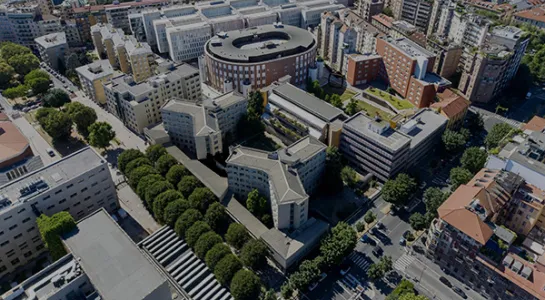
The campus is where people, knowledge, and technology come together. If we want a university that is truly attentive to the human dimension, we must create an environment that promotes wellbeing, collaboration, inclusion and sustainability. With the Campus 2030 project, we are investing in new study spaces, common areas, accessibility and energy sustainability. This is how we build a community capable of facing change together.
Many observers fear that AI could weaken human skills. Is this a real risk?
Artificial Intelligence is a powerful technology that amplifies what it finds: if it finds critical thinking, it reinforces it; if it finds fragility, it accentuates it. This is why we must prepare students to use AI as a tool, and not to delegate judgment to it. We need a balance between humans and machines. We need to strengthen our ability to verify, contextualize, and use AI to raise the bar, not as a shortcut. Our educational model is moving in this direction: more dialogue, more discussion, more responsibility in the use of technology. It is not a question of ‘protecting’ students from AI, but of preparing them to use it in an informed and beneficial way.
Many of the trends influencing the future of the university - demographic decline, migration, non-linear careers - belong to its field of research. How do they influence your vision?
In a profound way. The decline in births in Italy and Europe means that competition to attract students will become more intense: quality, reputation, and internationality are needed. Migration brings new perspectives, if we know how to welcome it. Longer life expectancy and fluid careers tell us that universities must become more open to lifelong learning. Thinking demographically helps us to look not only at today, but at the context in which our students will live, work and make decisions.
Looking ahead to 2030, what is the main challenge and the main opportunity for Bocconi?
The challenge is to maintain our relevance in a world undergoing rapid technological, geopolitical and demographic change. The opportunity is to build a university model in which the scientific method guides, technology supports, and the human element remains the protagonist. It is a complex balance, but one that is achievable if we continue to invest in people, research and the quality of our learning environment.
What is your wish for Bocconi in the future?
That it will be a place where people feel challenged but also welcome. Where science is open, technology is transparent, and humanity is visible. And that the campus—the spaces, services, and daily life—will continue to foster collaboration in diversity, curiosity, and sustainability. If we maintain this balance, we will not only train competent professionals: we will train people capable of guiding change.
Explore our Focus 'Strategic Plan 2026-2030'
The Bocconi of Tomorrow: Science Led, Human Centered and AI Ready
The Strategic Plan 2026–2030 prepares Bocconi for a future in which scientific...