
After the Ukrainian Crisis, Another Energy Shock
After the extraordinary peaks recorded following Russia’s invasion of Ukraine in 2022, international energy markets had gradually absorbed the most acute tensions. During 2024 and 2025, oil prices stabilized well below their post-war highs, and European gas prices fell sharply from the record highs of over €300/MWh reached during the most critical phase of the crisis. In this context, the outlook for 2026 appeared relatively favorable.
In its February 2026 oil report, the International Energy Agency (IEA) described a balance between supply and demand that suggested stable or moderately declining crude oil prices throughout the year. Similarly, the first quarter report signaled an improvement in natural gas fundamentals, thanks to the expansion of global LNG export capacity and European storage levels that were considered broadly adequate. The central scenario was therefore of gradual normalization, with lower inflationary pressures and greater macroeconomic predictability.
The return of geopolitical risk on oil
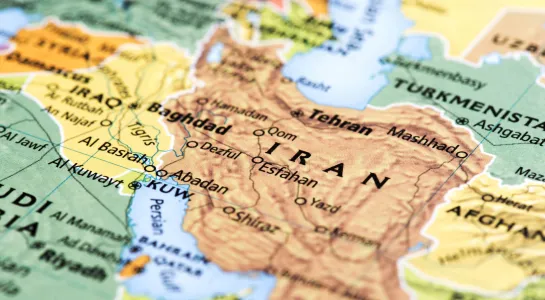
However, the new military conflict between the United States, Israel, and Iran has rapidly changed these expectations. In the first few days, Brent crude oil prices have already jumped by 10%, exceeding $80 a barrel. This movement reflects the incorporation of a geopolitical risk premium linked to the Strait of Hormuz, through which approximately 20% of global oil passes. Even without a formal closure of the passage, attacks on tankers and energy infrastructure have increased shipping insurance costs and fueled market volatility.
Gas, Europe's real sticking point
While the impact on oil is significant, the impact on natural gas appears to be potentially more destabilizing, particularly for Europe. Unlike crude oil, the global gas market, especially in the form of liquefied natural gas (LNG), is less liquid, more concentrated, and heavily dependent on localized infrastructure. In this context, Qatar plays a crucial role: the country is one of the world’s leading exporters of LNG and accounts for about one-fifth of global LNG trade. The suspension or reduction of the activities of Qatar’s main national company, following attacks and logistical risks in the Gulf, immediately reduced the cargoes available for Europe and Asia, increasing competition between these two regions.
The reaction in prices was sharp. The European TTF benchmark, which before the conflict fluctuated around €30-32/MWh, recorded increases of close to 40%, with prices rising to around €44-47/MWh and still higher peaks at times of greater tension. The lower flexibility of the gas market amplifies the effect of even limited disruptions.
The structural vulnerability of Italy and Europe
Europe is structurally vulnerable. After 2022, the replacement of Russian gas with LNG has increased dependence on suppliers such as Qatar and the United States. In Italy, in 2025, about one-third of national gas consumption was covered by LNG imports, of which about 24% came from Qatar: a figure that emphasizes the Italian energy system’s direct exposure to possible disruptions in the Gulf. Although stocks have been replenished since the most critical phase of the Ukrainian crisis, they remain below the seasonal average due to lower temperatures, limiting the margin for absorbing new shocks. Since gas determines the marginal price of electricity in many countries, any increase in its price is quickly passed on to bills and industrial costs, with potentially inflationary effects.
Decarbonization as a security strategy
The stability outlined by the IEA was clearly conditional on the continuation of a relatively stable geopolitical environment. The recurrence of crises – from Ukraine to the Middle East – is a testament to the vulnerability of economies that are still heavily dependent on oil and gas. Decarbonization now appears more than ever to be not only an environmental choice but also a strategy for security and economic competitiveness: an energy system less dependent on hydrocarbons (today from the Middle East, tomorrow from the United States?) and less exposed to geopolitical variability reduces the likelihood that regional conflicts will cause inflationary shocks and macroeconomic instability.

Explore our Focus 'War in the Middle East'
War in the Middle East: Energy, Alliances and Global Routes
The war between the US, Israel and Iran has dragged the Middle East into a high...