
Italy, Energy and War: the Time Factor
The escalation in the Middle East opens up a new outlook for Italy: the time horizon of geopolitical shocks. Rome has no significant trade exposure to Tehran nor strategic interests that would require it to reposition itself independently. However, what happens in the Persian Gulf could become very relevant for the national economy if the instability continues.
Italy is a large manufacturing economy, integrated into global value chains and structurally dependent on energy imports. Oil is almost entirely imported; gas remains central to the electricity mix; the energy bill weighs heavily on the trade balance. We are therefore exposed not as geopolitical actors, but as price takers on international energy markets.
Hormuz and the geopolitical premium risk
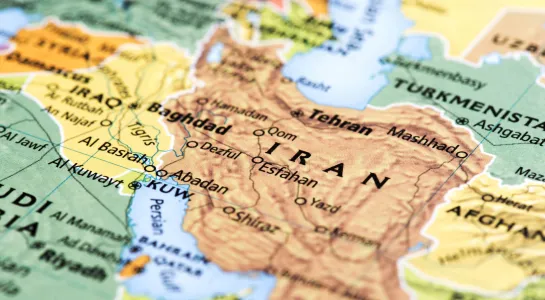
The Strait of Hormuz, through which about one-fifth of the world’s oil and a significant share of LNG transits, is a systemic bottleneck. Even without a physical blockade, the increase in perceived risk translates into a geopolitical premium on Brent, higher insurance costs, and higher shipping rates. In the event of prolonged disruption, the price of oil could rise significantly above equilibrium levels.
If the disruptions remain temporary, the market will tend to absorb the shock thanks to strategic reserves and increased supply. The problem arises when uncertainty extends over time and affects the area’s production infrastructure.
For Italy, however, the decisive variable is not oil, but gas. Oil affects fuels and inflation; gas still powers about 40% of electricity production, is crucial for energy-intensive industries, and largely determines the wholesale price of energy. In a global LNG market already close to saturation, any slowdowns in the Strait of Hormuz would have potentially stronger effects on gas than on oil, especially in terms of price.
Prices, growth, and financial stability
In the short term, Italy appears to be relatively protected in physical terms: after 2022, storage levels are higher on average and sources more diversified. However, the price of European gas remains interconnected with global markets and reacts immediately to geopolitical tensions.
If the price increase does not subside quickly, the effects will be felt in three domains. First, growth: higher energy costs reduce the margins of energy-intensive companies and the purchasing power of households, leading to lower investment and weaker consumption. Second, inflation: energy directly and indirectly affects prices, with the risk of reigniting inflationary expectations and limiting the ECB’s room for maneuver in a country with high public debt. Third, the trade balance: a structural increase in oil and gas would erode the surplus recovered after 2022, affecting the perception of sovereign risk.
It’s duration that counts, not distance
Italy’s vulnerability does not depend on the geographical proximity of the crisis, but on its possible persistence. Compared to 2022, the system is more resilient: diversified supplies, higher storage levels, and stronger European coordination. This reduces the risk of physical scarcity, but does not eliminate exposure to global prices.
In an interconnected economy, it is not only the space of the geopolitical shock that matters, but also its articulation over time. It is the duration factor that transforms a distant crisis into a concrete economic problem.

Explore our Focus 'War in the Middle East'
War in the Middle East: Energy, Alliances and Global Routes
The war between the US, Israel and Iran has dragged the Middle East into a high...