
Shaping the Future Responsibly
We live in an age in which the boundaries separating technology, society and the economy have become more porous than ever. Artificial intelligence is transforming the ways in which we think, produce value and relate to each other; geopolitical tensions are undermining systems that we took for granted; demographic changes are redrawing the maps of talent and access to opportunities, as well as fueling migration flows. In this complex scenario, the role of higher education takes on heavier significance: not only to educate, but also to contribute, through research, to guiding the way forward. Not only to interpret what is happening, but also to anticipate it whenever possible.
Bocconi's history is deeply rooted in this idea. Our tradition is not to react to change, but to read it clearly and transform it into opportunities for growth and development. This is what we have done in the past, and it is what we intend to keep doing today. The new Strategic Plan 2026–2030 stems precisely from this awareness: from the need to shape a future that we do not merely observe, but that we want to help build.
Economist Peter Drucker wrote: "The best way to predict the future is to create it." This sentence sums up our mission very well: the future is not something to behold, it is a responsibility to take. And this Plan was created precisely in this way: not as a forecast exercise, but as a shared choice to build.
It is, in fact, the result of a collective effort. Over the past few months, we have gathered studies, ideas, and perspectives from the entire Bocconi community: faculty, researchers, students, and staff. We have engaged in dialogue with businesses—which are at the forefront of technological, organizational, and social transformation—and with our alumni, who are active in institutions, international companies, startups, and civil society. This dialogue has given rise to a common vision: a university that remains true to its values while preparing for a rapidly changing world.
The Plan stems from the need to realistically interpret the global changes that are transforming work, society, and the production of knowledge. We have chosen to focus on a number of principles that we believe are fundamental to the future of the university.
The first is the value of the scientific method: in a world fraught with uncertain information and urgent decisions, research must remain rigorous, transparent, interdisciplinary, and capable of dialogue with society. This is the compass that allows us to navigate complexity.
The second principle is the centrality of people. In an accelerating world, what is human—critical thinking, judgment, creativity, socio-emotional skills—becomes even more valuable. Investing in people means investing in the future, in the quality of decisions, in social cohesion, and in the ability to turn challenges into opportunities.
The third principle concerns technology. Artificial intelligence is now part of the cognitive infrastructure with which everyone, individuals and organizations alike, operates on a daily basis.
Universities have a responsibility to prepare people who are not only able to use these tools, but also to understand them, evaluate them, and guide their impact.
These three points do not equal our ambition, but they represent its foundation. The university is an institution at the service of the community: it must contribute to public debate, support social mobility, promote an inclusive environment, nurture talent, and build international connections. In a historical phase marked by global tensions and pressures on academic freedom, Bocconi intends to stay an independent, open, and pluralistic environment.
The Plan therefore points in a clear direction: a university in constant evolution together with a society in transformation, bolstering its European roots and expanding its global presence, investing in its campus as a meeting place and in research as a public good, putting people at the center of its mission.
Building the future means taking responsibility for change, with realism and confidence. And that is exactly what we intend to do.
Explore our Focus 'Strategic Plan 2026-2030'
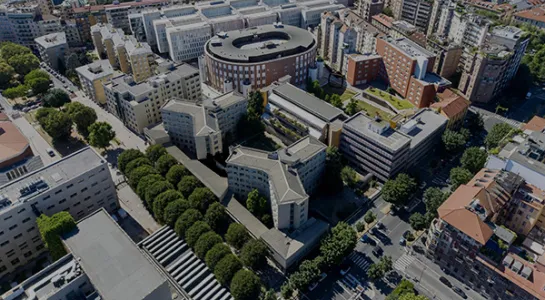
The Bocconi of Tomorrow: Science Led, Human Centered and AI Ready
The Strategic Plan 2026–2030 prepares Bocconi for a future in which scientific...