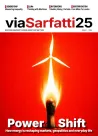
Micro-Turbines and Artificial Intelligence: Toward Distributed Energy
Wind power? It's increasingly central to renewable energy, compensating the vulnerabilities of solar. A sector that isn't just made up of large offshore turbine farms — perhaps the first image that comes to mind when talking about wind power — but also of small turbines designed for self-generation, known as micro-wind power. We discussed this with Giuseppe Imburgia, a Bocconi University alumnus and General Manager of GEVI, a startup making rapid strides toward scale-up (it recently closed a €2.7 million seed round). GEVI has designed a smart vertical wind turbine, specifically intended for captive consumption and capable of integrating artificial intelligence and shared generation. Imburgia, who joined GEVI specifically to steer the delicate phase of market entry, discusses the technology behind the product, the growth prospects of the firm and the role of micro-wind power in the energy transition, including industrial opportunities and unresolved regulatory issues.
Let's start here. What role can wind power play in the energy transition?
Wind power complements solar, both large-scale and micro-scale. Wind technologies are essential because they produce energy even at night and in the winter months, compensating for the limitations posed by photovoltaic systems. This reduces the need for storage and makes the system more efficient. With micro-wind power, production is for self-consumption, and therefore the return on investment depends on lower costs with respect to purchasing from the grid and the massive savings on battery storage.
So, does micro-wind power have great potential?
Yes, especially because the electrical grid is not ready to handle the flows we’ll have in the future, with the strong growth of renewables and electric mobility. Distributed solutions for captive consumption relieve the grid and, therefore, I believe, will be increasingly incentivized. The problem is that, until now, truly efficient and sustainable micro-wind technologies have been lacking. We are persuaded we have opened a blue ocean market.
What are the main challenges today?
Bureaucracy and the regulatory framework. In Italy, there is no clear regulation for a 3kW turbine like ours, and each local authority applies different rules to authorize its installation. There is a range going from complex engineering certifications of supporting structures to free private installation. This creates uncertainty and slows down market growth. It's paradoxical, because GEVI is an entirely Italian business: the technology, the suppliers and the expertise are all Italian, yet today we see that we have only developed a small portion of the business in Italy.
What do you want from politicians?
An updating of regulations and a more balanced vision of renewables. Today, incentives are almost exclusively focused on photovoltaic solar, but the energy transition requires the mix of the two technologies. Wind power, even small-scale and for self-consumption, can make a significant contribution if placed within a clear and coherent regulatory framework.
What kind of company is GEVI today?
We're still a startup, but with scale-up ambitions. Today, we're entering the market with a technology that's ready for pre-series production. After announcing the investment round, we received over 650 commercial inquiries from around the world in less than two months. We have a so-called "happy problem": demand is exceeding our current production capacity. Now the main challenge is to scale in an orderly manner, find industrial partners and maintain control of business growth.
Let's delve into the technology: what makes your wind turbine different?
GEVI develops small-scale vertical wind turbines designed primarily for self-consumption. The main difference compared to traditional turbines is the use of artificial intelligence that orients the blades independently and continuously, based on wind conditions. Historically, vertical turbines have never caught on because they are less efficient than horizontal ones. We have overcome this limitation.
How?
Thanks to a system that combines an advanced anemometer, which we have developed in-house, and machine learning algorithms. In practice, the turbine "reads" wind speed and direction in real time, and artificial intelligence calculates the optimal position of each blade instantaneously. This way, we maximize production in the active phase and reduce losses in the passive phase.

The New Geography of Energy
How the energy transition is reshaping European markets, competitiveness and economic power