
Tourism in Shock: How the Conflict Is Reshaping Routes, Costs, and Perceived Safety
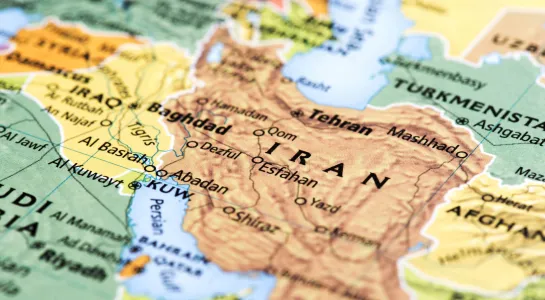
Geopolitical shocks quickly impact tourism because they affect two essential conditions for travel: accessibility and confidence. This explains the effects on the sector of the escalation triggered by the United States and Israel toward Iran, which are not limited to travel flows to and from the countries directly involved but tend to spread beyond the conflict zone.
The disrupted connectivity: the early impact on tourism
The initial impact was primarily physical: the disruption of connectivity in a strategic region. Closures of portions of airspace, operational restrictions, and route diversions affected the Gulf’s hub function and, following a chain reaction, flows to Asia and beyond. The shock took on a systemic dimension because the network was disrupted before demand could adjust.
In the first two days, over 5,000 flight cancellations were recorded, and given the region’s role as a crossroads, the impact quickly spread to intercontinental routes, as Gulf airports account for approximately 14% of global passenger traffic. Regarding the effects on the Middle East, Oxford Economics estimates two scenarios: with a relatively quick resolution, inbound arrivals to the region would drop by 11% (23 million fewer international visitors compared to the December baseline) and spending would fall by $34 billion; if the crisis drags on for about one to two months, losses would rise to 27% and $56 billion in spending.
Perceived safety and regional contagion
It is true that Middle Eastern tourism has shown resilience in the past once operations and institutional communication were restored; here, however, a specific issue is at stake: the region’s credibility as a safe destination and, at the same time, as an intercontinental air bridge. For this reason, recovery may not be immediate even once routes are formally reopened.
This disruption has ripple effects on travel costs that extend beyond the Gulf countries, as longer routes and reduced capacity drive up fares and transit costs. The primary amplifiers, in the immediate term, are rerouting—which increases flight times and fuel consumption—and the risk premium, which impacts insurance and security management. A further key factor, however, is perceived security. The literature on conflicts and political crises shows that these shocks not only reduce tourist flows to directly affected destinations but can also produce longer-lasting effects and trigger spillovers, penalizing even countries not directly involved through a logic of regional contagion. Market evidence released after the start of the Israel–Hamas war has, for example, shown a deteriorating perceived security well beyond the borders of the conflict area, consistently with the idea of a ripple effect.
Energy prices and new geographies of tourism demand
Viewed in the context of March 2026, these factors suggest a fairly linear progression: Israel and Iran suffer the direct shock; Gulf countries are vulnerable because, in addition to route closures or diversions, the comparative advantage of hubs and reliable destinations is eroded. Finally, secondary destinations not directly involved may be exposed to reputational contagion, since often the mere mental association with a single macro-region is enough to trigger cancellations even in the absence of actual physical impacts.
In the medium term, and on a global scale, the most persistent effect could instead result in higher prices and a greater reallocation of demand toward alternative destinations, especially if the conflict were to drag on. It is true that many airlines have hedged prices before the increases, but the crux of the matter is the full-scale impact once those hedges expire.
Price hikes tend to appear first on long-haul routes, already visible on flights to Asia, but if the rise in oil prices becomes entrenched, the effects could extend to intra-European routes and, subsequently, to domestic ones. Finally, the key question remains the extent to which these costs will be passed on to overall energy costs, which would make travel more expensive by any means and to any destination, with ripple effects across all tourism services. Alternative destinations would thus have to cope with a mix of stronger demand and higher overall costs.
This shock makes the forecast outlook for 2026 harder and calls for a careful revision of the outlook.

Explore our Focus 'Conflict in the Middle East'
War in the Middle East: Energy, Alliances and Global Routes
The war between the US, Israel and Iran has dragged the Middle East into a high...