Italy, Growth That Never Takes Off
As Europe returns to debating fiscal rules and interest rates in the United States remain higher for longer than expected, Italy once again finds itself in the same position: weak growth, high debt and limited room to maneuver. The figures reveal an increasingly evident contradiction. On the one hand, nearly €3 trillion in public debt; on the other, over €6 trillion in private savings that, however, fail to translate into productive investment.
Meanwhile, global competition is accelerating: large US platforms dominate markets, China is pushing forward in industry and technology and Europe is struggling to define a common industrial strategy. In this context, Italy continues to oscillate between defense and inertia. This is where Stefano Caselli’s reflection in his book Il futuro non aspetta (The future won’t wait), published by Egea, comes in: the real issue is not only how much debt we have, but what we choose to do in order to grow.
Let's start with the question posed in the book: is Italy a numerator country or denominator country?
This is a simple but important question. The numerator is debt, the denominator is GDP. If we continue to focus on the former, we remain trapped in the past. If, instead, we work on the latter, we build the future. The point is that growth is not automatic: it requires investment, risk-taking and above all a clear strategic choice.
You place strong emphasis on equity capital. Why is it so central?
Because it stands in contrast to debt — not only from a technical standpoint, but also culturally. Equity capital is about openness, challenge and transformation. Debt is about discipline, but also preservation. Without equity, there is no innovation, no scaling up and no companies capable of truly competing. That is where the real game is played.
Yet Italy remains a strongly bank-centered economy.
Yes, and today this is more of a constraint than in the past. We have an enormous amount of private savings, but it is not sufficiently connected to the real economy. The result is a paradox: we are a wealthy country with low growth. These savings needs to flow into businesses, innovation and long-term projects. Otherwise, it merely remains a source of annuity.
The book also seems to offer an implicit critique of the Italian business model.
More than a critique, it is an observation. We have an extraordinary network of SMEs, but what is missing is a shift in scale. Without larger firms, there is insufficient investment, talent is harder to attract and global competition becomes unsustainable. The issue is not to replace SMEs, but to enable them to grow.
Does this also apply to Europe?
Even more so. Europe today suffers from a problem of scale. In a world of global platforms, size matters. Without large companies and strong financial intermediaries, we risk becoming marginal. The Capital Markets Union is a crucial step, but a shared industrial vision is also needed.
In the book, you refer to a "polycrisis." How much does this context weigh on economic choices?
A great deal. We are not facing a single crisis, but multiple ones: geopolitical, energy-related and social crises. This makes everything more complex, but also more urgent. Innovation, sustainability and infrastructure are no longer options, they are conditions for survival.
What, then, is the role of the state in all this?
The state must create the right conditions, not replace the market. It should guide, incentivize and leverage resources. And when it intervenes directly, it must do so with clear, temporary and measurable approaches. We can no longer afford interventions without a strategy.
In the end, is your book optimistic or apprehensive?
Both. It’s optimistic, because the resources are there: capital, savings, skills. But it is also apprehensive, because a clear choice is still missing. The future won’t wait, and we must decide whether to be shaped by it or to shape it ourselves.
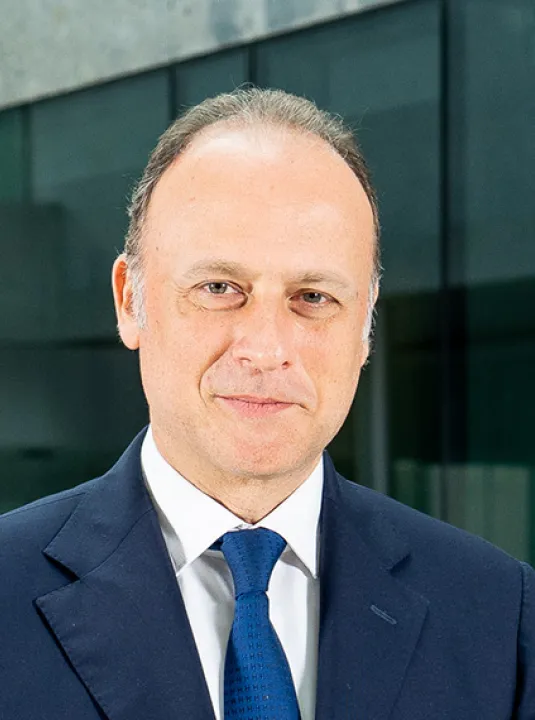

The future won't wait
Italy is facing a decisive choice: to continue being a “numerator-focused” country, concentrating on the debt component in the debt-to-GDP ratio, or to finally become a “denominator-focused” country, aiming to grow GDP through bold investments and a long-term vision. In Il futuro non aspetta (Egea, 2025) Stefano Caselli addresses this challenge.