Vikram Has a Full Plate of Ideas
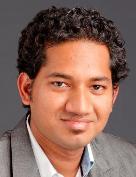 |
Creating a profitable business with a good product that is produced sustainably and used responsibly. With these good intentions, Vikram Kandula, a 27-year old Bocconi student from India, founded his own business, Hampi Products. The company holds dear to a practice held in rural Indian, and produces disposable dishware for catering which sport a stylish design and a very low environmental impact. After graduating in engineering in Delhi, Vikram already showed the first signs of an entrepreneurial spirit at 24 when he opened his own business in clothing manufacturing company. The business was going well, but Vikram understood that he needed to learn some more skills in order to better develop his ideas. "I needed to learn more about business and I knew Bocconi had a good reputation for teaching a wide array of management skills," explains Vikram. "And I also liked the idea of living in Italy for a few years and getting to know the culture."
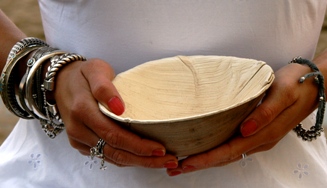 |
But while he was thinking about making a landing at Bocconi, Vikram already had his next initiative in mind. A light bulb went on when he went to a wedding in a rural part of India with a Dutch friend, Frederic Sanders, whom he had met in Mumbai while Sanders was doing an internship in the Sustainability Department at ABN AMRO. The two friends were struck by the disposable plates used for the wedding feast of over 1,000 guests. "They used plates made from the leaves of a local palm tree. The leaves fall naturally all year long and the plates are made by local producers without chemical or toxic products – so production is sustainable and responsible," says Vikram. "They are perfectly ecological and biodegradable. These are all factors which today's market values. The only thing left to do was to refine the plates' design and think about how to produce them on a larger scale."
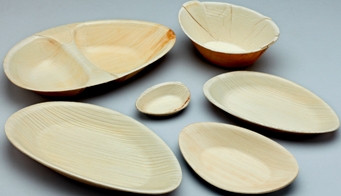 |
Vikram and Frederic went to work, in collaboration with the local producers, and after a few months they had put together and tweaked a line of products and were ready to begin exporting. Summer was approaching and they decided to try to sell their product to seaside clubs in Bloemendall on the Dutch coast. They received good feedback, with the fifth club owner they spoke to immediately ordering 5,000, and the business took off. "Frederic has an aesthetic eye and is good with emotions, while I have a good business sense and am good with costs. We argue a lot, but there's a good balance between our skills," says Vikram. Meanwhile, with a Merit Award under his belt (the Bocconi scholarship for international students assigned on the basis of academic merit), in September Vikram arrived in Milan to begin work on his Master of Dcience in International Management. The hard work in class is intense for someone like Vikram who continues to work on his ecological dishware project. A Dutch designer is broadening the range and increasing the number of producers in India who, continuing to use entirely handmade practices, are being trained with new technologies and processes. With Frederic working full time and Vikram working one week a month, the pair was able to sign agreements with several distributors in France for the catering industry and make contacts with other distributors in Italy. Estimates for sales in 2010? 1.5 million items. It's a commitment that will require a factory to be built in southern India to keep up with production of enough plates to cover requests. "Pursuing this business alongside my studies is a big job, but having my own business has always been a dream of mine," explains Vikram. "And everything I'm learning in the classroom, marketing for example, can be applied right away. Professors like Markus Venzin and Robert Grant have helped me immensely in their advising."