
Cities at the Center: From Sources of Emissions to Laboratories of the Transition
The concentration of people, buildings and other infrastructure that characterizes cities is the primary source of global greenhouse gas emissions (approximately 70% according to the IEA) and, at the same time, it also leads to greater vulnerability to the impact of climate change. Floods, heat waves and other extreme climate events increasingly cause significant damage to people, infrastructure and services in urban areas. Furthermore, environmental fragility often overlaps with social vulnerability, so it is precisely the most vulnerable segments of the population that suffer the greatest damage from a changing climate.
Cities, however, are also places where innovation capacity is concentrated, thanks to the presence of fixed capital and human capital, and the focus of targeted climate policies defined at different levels of government. In particular, climate mitigation and adaptation measures, albeit voluntary, thanks to their cross-industry nature are playing an increasingly strategic role in guiding urban planning decisions and city development in the medium-to-long term. New paradigms in urban development are defined by innovation in energy generation and consumption systems, mobility of people and goods, in building codes and remote work, in the management of local public services, as well as in land use and the use of nature-based solutions. Carlos Moreno's concept of the 15-Minute City acknowledges the importance of local economies by arguing for the supply of densely, evenly distributed services, which is an evolution of the concept of functional mix in urban planning.
SDG #11 and others
At the international level, the United Nations 2030 Agenda identifies a specific Sustainable Development Goal, SDG #11, to promote inclusive, safe, resilient and sustainable cities, identifying specific indicators to measure progress in this direction. More generally, most of the 17 SDGs identified by the UN are associated with urban transformation. In 2016, a New Urban Agenda was adopted at the Third United Nations Conference on Housing and Sustainable Urban Development (Habitat III) in Quito (Ecuador), with the aim of promoting policies suited to the new challenges of urbanization. At the EU level, these global initiatives have been translated into a strengthening of the urban dimension of the Union’s cohesion and environmental policies. In December 2025, the European Commission presented the EU Agenda for Cities, a policy framework covering housing, mobility, climate action, digitalization, inclusion, security and international cooperation. This framework also aims to channel more effectively the €100 billion made available to urban areas in the 2021-2027 budgeting period and better evaluate impacts from various funding sources.
Climate action at the urban scale is the subject of two EU Missions: one selecting a hundred smart cities that can get to climate neutrality by 2030, and another on Adaptation to Climate Change, both part of the Horizon Europe program. These missions systematize and prioritize research topics, whose strategic direction is reflected in actual programs such as drafting the Climate City Contract for each of the 100 cities selected by the European Commission that have committed to climate neutrality with a multiple stakeholder plan, which in the case of Milan also includes Bocconi University.
In this context, urban regeneration, which can reconvert infrastructure and functions that no longer meet the needs and uses of the citizenry, represents an opportunity to address the challenges of sustainable development. However, such outcome is not a foregone conclusion; on the contrary, it requires defining methods of interaction between public urban planning and predominantly private development functions to ensure transparency and the effective generation of social value that is measurable through appropriate indicators. The SUR Lab at Bocconi University, as part of the MUSA Project within the National Recovery and Resilience Plan (PNRR), has developed a usable model of indicators consistent with an ESG approach. To this end, assessing the impact of urban regeneration requires evaluating not only the transformations affecting the built space, but also those concerning natural systems, mobility modes and energy production, as well as economic and social changes on a broader scale.

Explore our Focus 'Pact4Future 2026'
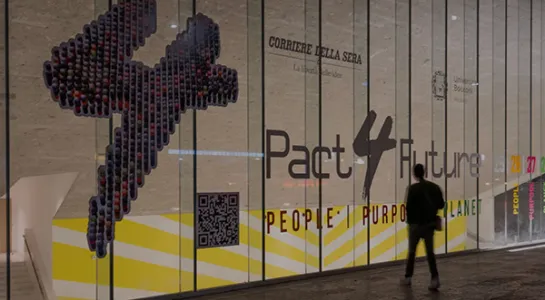
Interdependent. People, choices, planet
From March 24 to 26, Bocconi and Corriere della Sera return with the third...