Society Has Changed. The Social Contract Has Been Left Behind
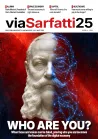
We’ve gained 33 years of life expectancy in a century, opened universities to millions of people and shattered barriers that for generations determined the fate of women and men. Yet, instead of looking ahead, we seem drawn to a past we imagine to be safer. It’s the paradox of contemporary societies: they have never been so open, and yet never so tempted to close themselves off. In his new book, , Iperdiversità. Le rivoluzioni che hanno cambiato il nostro modo di vivere assieme (Sellerio, 2026), Francesco Billari, demographer and Rector of Bocconi University, shows how longevity, education, gender equality and migration have multiplied the talents that can contribute to progress. But he warns: the benefits are not automatic, since institutions have often remained partly trapped in the last century. That is why it is not enough to simply celebrate differences. We need a new social contract — one capable of transforming these differences into opportunities and ensuring that those who bear the costs of change are not left behind.
The world has never been so open. So why are we so afraid of the future?
Because we have a selective memory. We focus on today’s problems — which are real — and forget the ones we’ve overcome. In Italy, over the past century, life expectancy has increased by more than 30 years: it’s as if we’d gained eight hours a day, every day. For millennia, countless children did not reach adulthood; education was a privilege reserved to the few, and being born a woman or into a poor family could almost entirely determine one’s fate. I’m not saying that everything is fine today. I’m saying that the past is not the solution. Nostalgia becomes dangerous when it turns into a political agenda. Otherwise, we end up calling even those achievements — which we have not yet learned to manage — a crisis.
If openness has helped us progress, why has it become a political target?
Because the benefits are often widespread and long term, while the costs can be immediate and concentrated on certain people. And here, two mirror-image mistakes are made. The first is to find a scapegoat: immigrants, women advancing in society, young people, the elderly. The second is to dismiss those who are afraid as ignorant or backward. Remember Hillary Clinton’s use of the term “deplorables” during the 2016 US presidential campaign. If you want to convince someone, you can’t start by looking down on them. An open society defends itself by distributing the opportunities and costs of change equitably. Inclusion must also extend to those who today feel defeated by openness.
We’re living longer, yet we continue to pit young people against the elderly. Isn’t that a paradox?
It’s a paradox that stems from institutions designed for a pyramid-shaped population, with many young people and few older adults. Today, numerous generations with very different experiences coexist. Take Brexit: many young Britons wanted to remain in the European Union, but they’ll have to live longer with a decision they didn’t support. There’s a problem of representing the future — not just regarding pensions. Age stereotypes also persist in the workplace. In the book, I describe a research group that developed a 3D metal printer: the key was combining the programming skills of the younger members, the expertise of the faculty and the practical experience of the older researchers. Longevity has given us this collaboration, not a war between the generations.
In the book, you talk about the “Einsteins” and “Marie Curies” we’ve lost. How much talent are we continuing to waste?
Too much. In the United States, those born into the top 1% of households are about 10 times more likely to become inventors than those born into the bottom half. Katalin Karikó, who grew up in a modest family in Hungary, helped make mRNA vaccines possible and went on to win the Nobel Prize. How many potential Karikós can’t even get started? Family background continues to play a role even among those with the same degree, through connections and financial resources. For a university, the real challenge is balancing high quality with access to talent. At Bocconi, the stories told through the “We Made It” campaign illustrate precisely this: behind every successful journey lie individual commitment, family support, and encounters and opportunities made possible in part by the University itself. It’s not enough to tell young people, “If you’re good enough, you’ll make it.” We must ask ourselves how many we aren’t even giving the chance to try.
Women study more than men, but Italy still fails to make use of their labor. And meanwhile, fewer and fewer children are being born.
This is a sign of a revolution left half finished. We’ve opened up education to women, but work, services and family care haven’t changed to the same extent. We’ve asked women to behave like men in the labor market, while continuing to assign them the bulk of domestic responsibilities. In countries that truly allow for a work-life balance, female labor force participation can be high without depressing birth rates. In Italy, we continue to debate how many children people should have. The real question, however, is this: why do we make it so difficult for them to have the children they want? If a country invests in women’s education and then hinders their economic independence, it doesn’t just lose out in terms of equity. It wastes a portion of its human capital.
Diversity enriches our cities. But does living close together really mean living together?
No. A city can be hyper-diverse yet deeply segregated. All it takes is for people of different backgrounds to live in separate neighborhoods, attend different schools and not share the same spaces. Yascha Mounk uses a metaphor that I find effective: society as a public park. You go there with your friends; you can keep to yourself, but you also have the opportunity to meet someone new. We need to prevent invisible barriers from rising. Cities have fostered innovation precisely because they have brought together different kinds of knowledge, experiences and backgrounds. Milan knows this well. But if housing, schools or access to services permanently divide people, the potential of diversity remains merely theoretical. Coexistence isn’t created by decree — it must be fostered.
If everyone has a unique life path, does a welfare system built around categories still make sense?
Categories are useful, but they do not fully describe people. Two 60-year-olds can have very different lives: in terms of health, work, family, income and expectations. That is why I propose a universal safety net, accompanied by specific responses to the vulnerabilities that arise over the course of a lifetime. There’s also an uncomfortable truth about merit. Effort matters — and how. But no one chooses their parents, the health they’ll have or all the crises they’ll have to face. No one is capable of perfectly controlling their own destiny. If we attribute every success to merit and every failure to individual faults, we end up justifying inequalities instead of understanding them. An open society must offer second chances, not just a race at the starting line.
The book calls for a new social contract. Where do we start from, in practical terms?
By choosing not to shape the future through nostalgia. First: invest in people, starting in childhood, without interrupting their education when they enter the workforce. Over the course of a long life, returning to school should be the norm, not an exception reserved for a privileged few. Second: build safeguards that address actual vulnerabilities, rather than merely defending administrative categories and standard pathways. Third: give weight to the long-term consequences of public decisions. Debt, the environment, education and infrastructure also affect those who do not vote today — or who have not been born yet. The new social contract is not just a slogan about inclusion: it requires fiscal, organizational and institutional choices. These are investments that enable people to contribute more, the economy to innovate and democracy to remain credible. Otherwise, we are blaming people for the failures of institutions.
Which would be the more serious failure: failing to manage our differences or missing out on the opportunities they offer us?
The two are closely linked, but I believe the greatest risk is turning our backs on the possibilities before us. For millennia, human history has also been a history of wasted talent. Children who did not survive, women who were prevented from getting an education, people whose destinies were determined by their families or places of birth. Today we have the opportunity — still incomplete but extraordinary — to change this history. This does not mean that everyone must become a scientist, an entrepreneur or a Nobel laureate. It means allowing everyone to develop their own abilities and contribute to society, in accordance with their own aspirations. In the book, I begin with a quote from Newton: “If we have seen further, it is by standing on the shoulders of giants.” But today we can greatly increase the number of those giants. The future is not set in stone, and it will not necessarily be better. It will depend on the choices we make. Diversity is a historical achievement. Turning it into an opportunity for everyone is the responsibility that lies before us.

Iperdiversità. Le rivoluzioni che hanno cambiato il nostro modo di vivere assieme
What happens when millions of lives stop following a predetermined path? In Iperdiversità. Le rivoluzioni che hanno cambiato il nostro modo di vivere assieme (Sellerio, 2026), Francesco Billari weaves together demography, history and economics to explore four decisive transformations: longevity, education, women’s emancipation and migration. What emerges is a world of increasingly diverse paths, where talent can flourish in places that were once excluded. But openness does not govern itself: to transform it into shared progress, we need institutions, social welfare systems and policies capable of changing alongside people.